
INDUSTRY:
AI 视觉设计
YEAR:
2023
PROJECT:
Qrazy Menu
TOOLS:
DALLE 2
ABOUT
Qrazy Menu is an experimental visual design project created shortly after the public release of DALL·E 2. The project explores the potential of early text-to-image artificial intelligence within visual communication and editorial design.
《Qrazy Menu》是一项完成于 DALL·E 2 公测初期的实验性视觉设计项目,旨在探索早期文生图人工智能技术在视觉传达与编辑设计领域中的应用潜力。
Due to the unstable visual consistency of early generative models, significant manual intervention was required throughout the creative process. Individual food elements, architectural references, and cultural motifs were carefully selected, curated, and composed to establish coherent visual narratives. Particular attention was given to maintaining stylistic unity between the generated dishes and the architectural forms derived from different cultural contexts.
由于当时生成模型的风格稳定性较弱,项目在创作过程中需要大量人工介入。设计过程中不仅需要不断调整提示词与生成策略,还需要对食物主体、文化建筑元素以及场景背景进行筛选、重组与统一,以确保整体视觉语言的一致性。尤其是在不同文化建筑形态与食物造型的融合过程中,人工设计决策成为维持作品叙事逻辑与视觉完整性的关键环节。
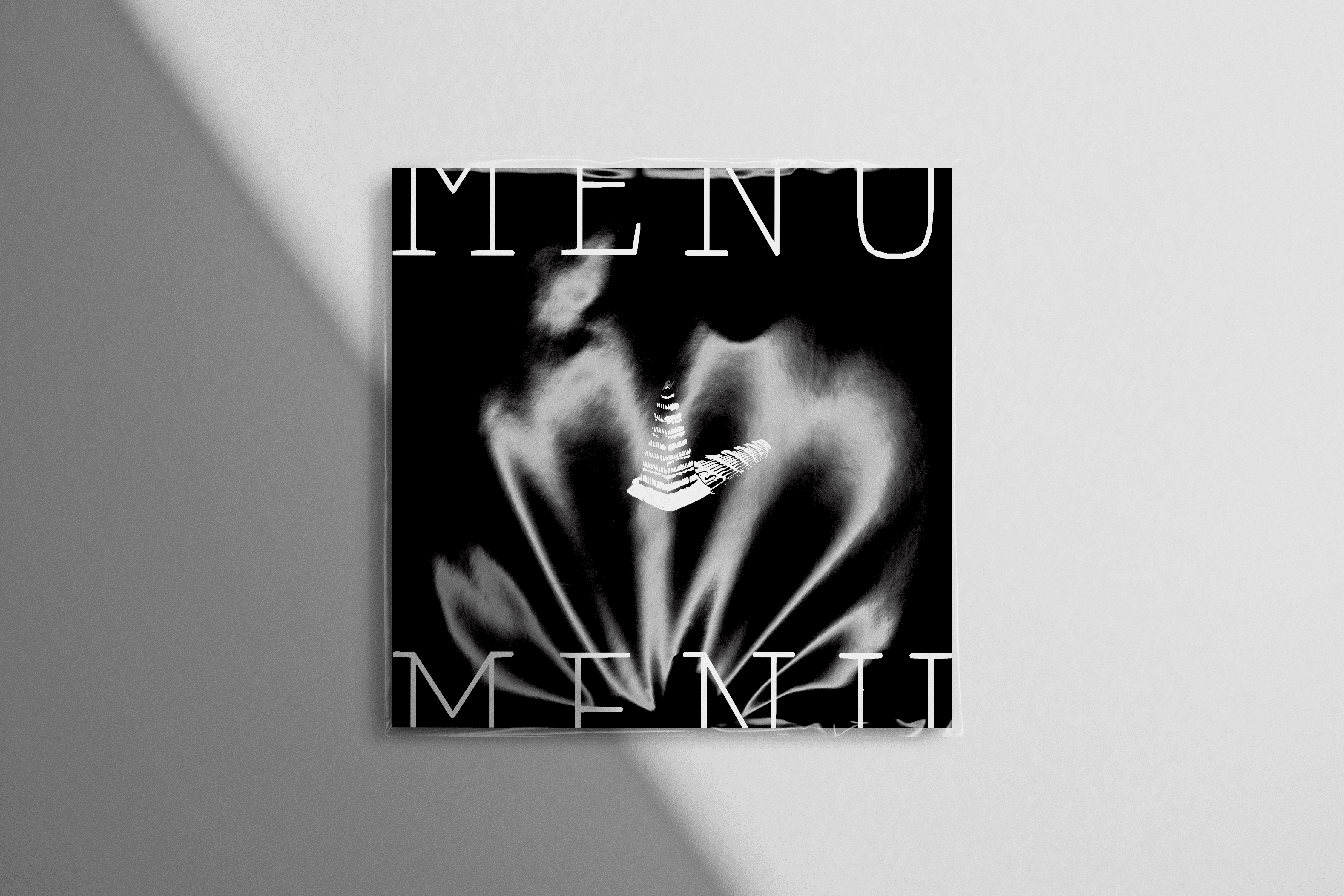
Rather than relying solely on AI-generated outputs, the project adopted a hybrid workflow that combined prompt-based image generation with human-directed visual editing and composition. The resulting menu transforms food into speculative visual experiences while reflecting on the evolving relationship between designer and machine.
项目并非单纯依赖 AI 自动生成,而是采用生成式工具与人工视觉设计相结合的混合创作流程。最终成果将菜单设计转化为一种兼具幻想性与叙事性的视觉体验,同时记录了生成式人工智能早期发展阶段中设计师与算法协作的实践探索。
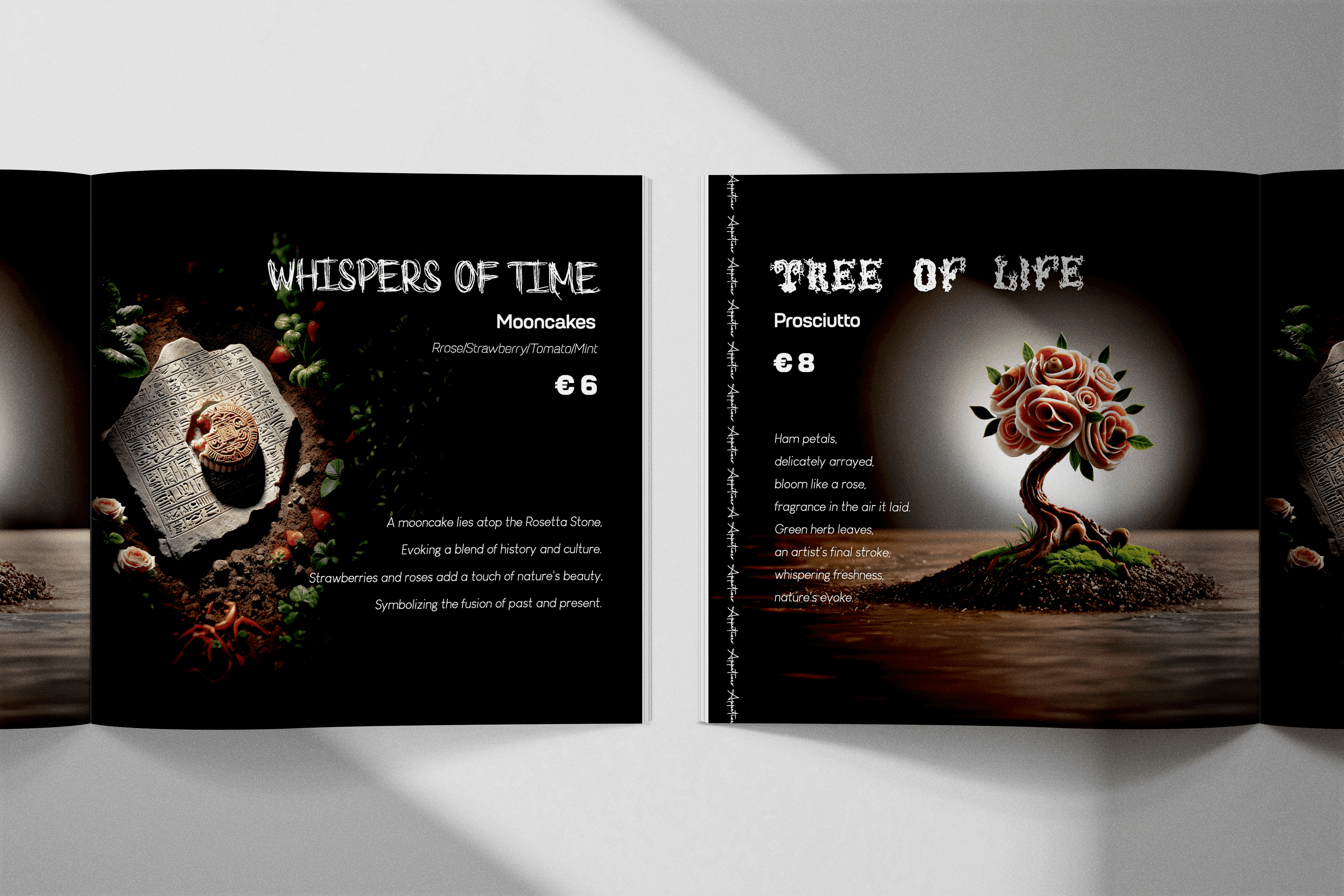
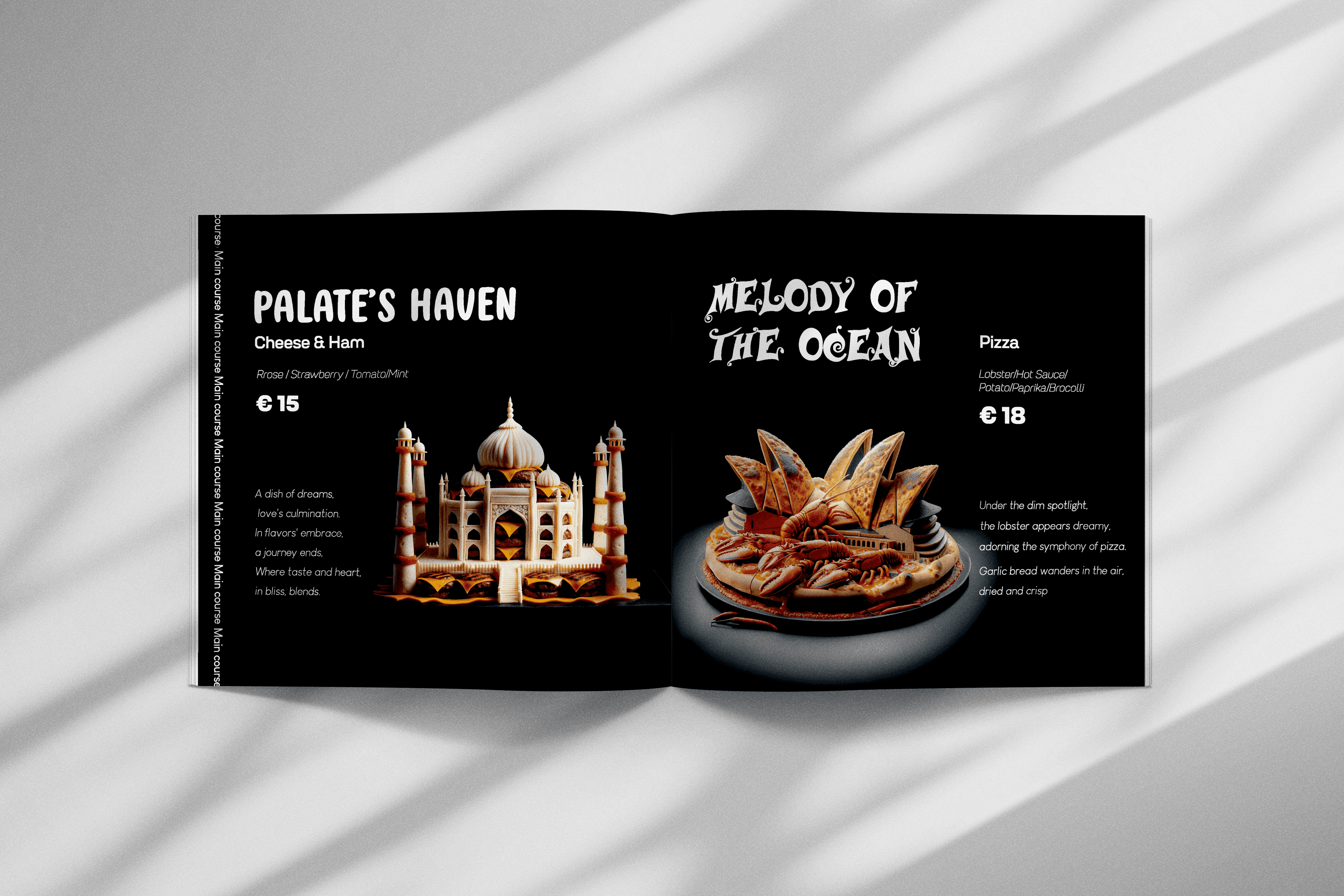
One of the major challenges of the project was the lack of visual consistency in early text-to-image models. Similar prompts could generate dramatically different results, making it difficult to establish a coherent visual language across the menu. Rather than relying on repeated generations to achieve consistency, the project developed a research-based framework to guide the creative process.
项目最大的挑战之一来自早期文生图模型缺乏稳定的视觉一致性。即使使用相近的提示词,生成结果在构图、风格和细节表现上仍可能出现较大差异,因此很难仅依靠生成过程建立统一的视觉语言。为了解决这一问题,项目并未将重点放在反复生成图像上,而是通过文化研究与结构分析构建设计框架,为后续创作提供明确的视觉依据。
Historical symbols, architectural references, artifacts, and food ingredients were examined to identify shared structural characteristics, material qualities, and cultural meanings. These relationships became a foundation for visual development, allowing generated images to be evaluated and refined against a consistent conceptual system. Through this process, AI functioned as a tool for visual exploration, while research and design direction remained the primary drivers of the final outcome.
项目通过分析历史符号、建筑形态、文物特征以及食材本身的视觉语言,寻找不同对象之间在结构、纹理与文化含义上的共性。这些研究成果成为视觉设计的重要依据,使生成结果能够围绕统一的概念框架进行筛选与优化。在这一过程中,人工智能更多承担视觉探索工具的角色,而文化研究与设计决策则始终主导着最终作品的形成。
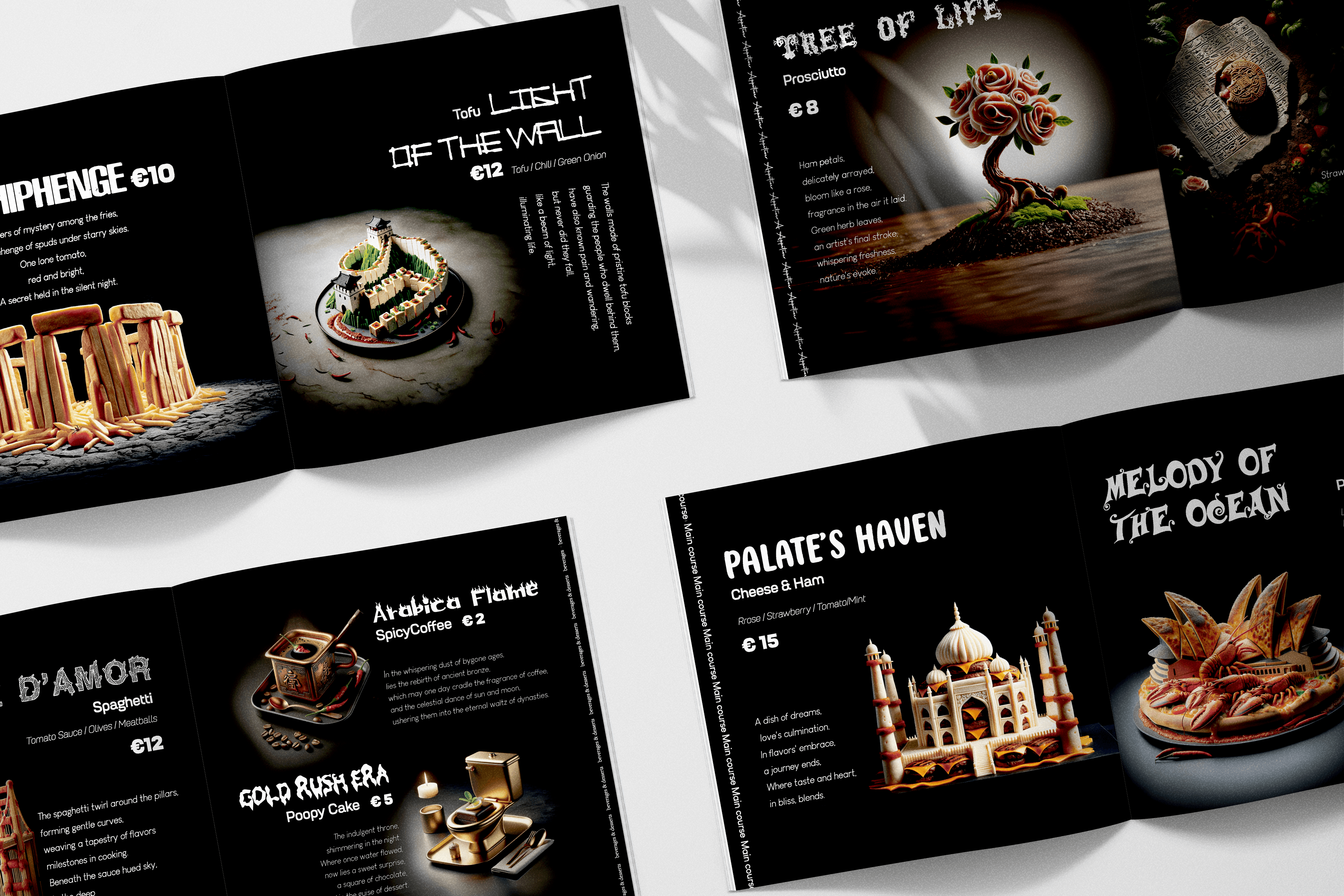

All rights reserved.
Hongwei ©2026